What Is IV Sedation Dentistry? A Patient's Guide
For many people, anxiety about dental treatment prevents them from seeking care they need. If you experience dental fear or require complex procedures, IV sedation dentistry in Toronto offers an evidence-based solution that allows you to receive treatment comfortably while remaining conscious. This guide explains what IV sedation is, how it differs from general anaesthesia, who might benefit, and what to expect.
What Is IV Sedation Dentistry?
IV sedation dentistry, also known as conscious moderate sedation, is a pain and anxiety management technique in which sedative and analgesic medications are administered intravenously to relax a patient during dental treatment. A patient under IV sedation remains conscious and responsive—they can follow simple commands and maintain a natural airway—but enters a deeply relaxed state with significant amnesia, meaning they typically remember little to nothing of the procedure. This allows dentists to work efficiently while the patient experiences minimal anxiety or discomfort. IV sedation is different from general anaesthesia, in which a patient is completely unconscious and cannot be aroused by external stimuli; under IV sedation, you remain aware but in a profoundly calm mental state.
How Is IV Sedation Different from General Anaesthesia?
The distinction between IV sedation and general anaesthesia is clinically important and affects monitoring requirements, recovery time, and safety considerations.
Consciousness and Responsiveness
Under IV sedation, you remain conscious and can respond to verbal commands. A dentist might ask you to open your mouth wider or turn your head, and you can comply. Under general anaesthesia, you are completely unconscious and cannot be roused by external stimuli; an anaesthetist must manage your airway entirely.
Airway Management
With IV sedation, you maintain your own airway and breathe naturally. With general anaesthesia, the anaesthetist must manage your airway, often using an endotracheal tube or a supraglottic airway device.
Recovery Time
IV sedation typically involves a shorter recovery period. Most patients can be discharged within 30–60 minutes of the end of treatment, though they must have an escort and cannot drive on the day of the procedure. General anaesthesia recovery is usually longer and may require more intensive post-operative monitoring.
Monitoring and Cost
IV sedation requires less intensive monitoring infrastructure than general anaesthesia and is usually less costly. General anaesthesia, by contrast, typically takes place in a hospital or ambulatory surgical centre with full anaesthetic support.
Who Is a Suitable Candidate for IV Sedation?
IV sedation can benefit a range of patients, but it is important to have realistic expectations about what moderate IV sedation can and cannot achieve.
Complex or lengthy procedures. Patients undergoing procedures such as the removal of all four impacted wisdom teeth in a single session, full-arch implant surgery (All-on-X), or multiple restorative treatments completed in one appointment often benefit significantly from IV sedation. The combination of reduced anxiety, effective pain relief, and the amnesic effect means that lengthy or demanding procedures feel far shorter and less stressful.
A sensitive gag reflex. Sedation suppresses the gag reflex, making it easier for the dentist to work in the back of the mouth.
Difficulty sitting still or communicating. Some patients have trouble remaining stationary or communicating discomfort during treatment; sedation addresses both challenges.
Medical or psychological conditions. Patients with certain developmental or neurological conditions may find IV sedation helpful for dental care, subject to assessment.
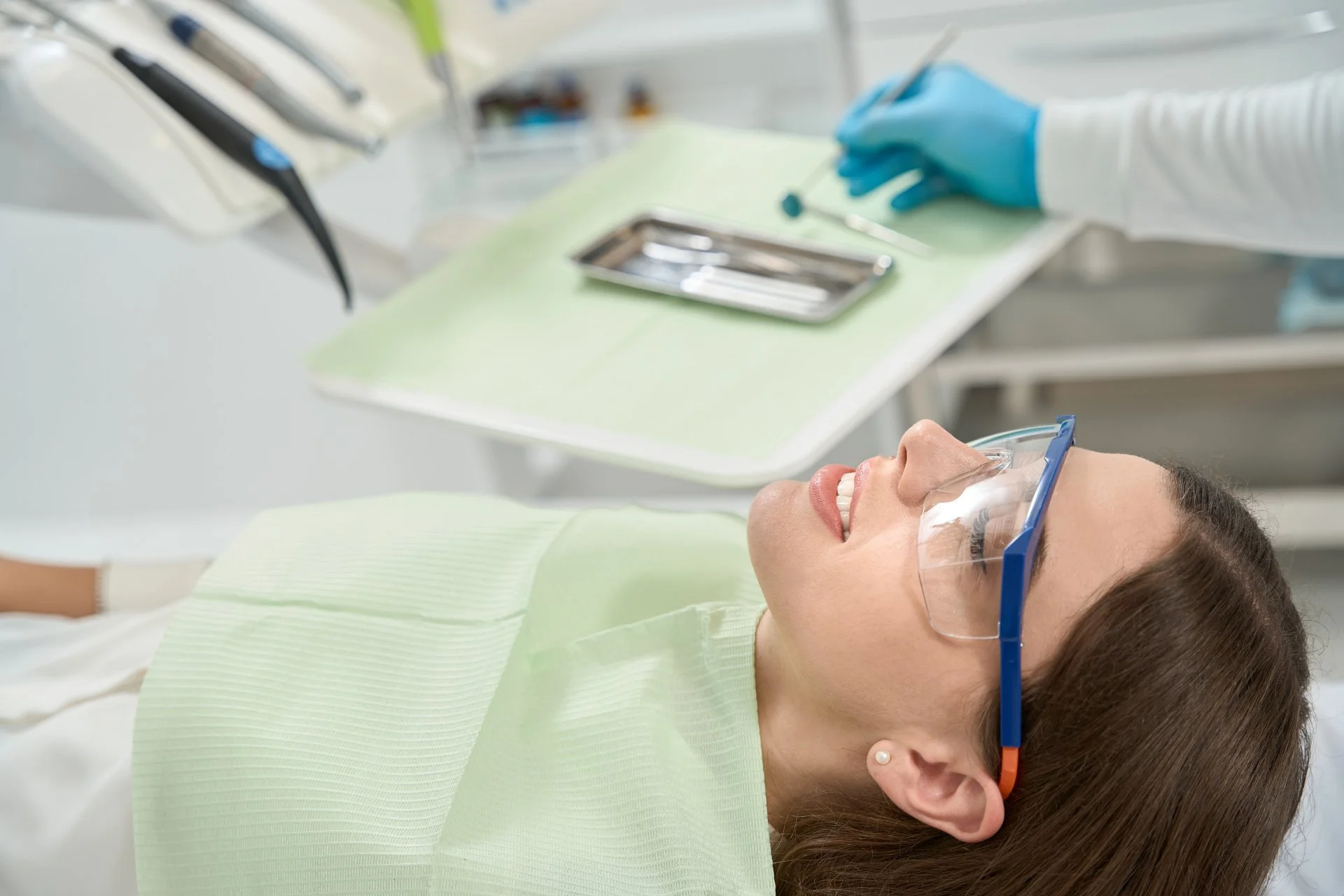
IV Sedation and Dental Anxiety: Knowing What to Expect
For patients with mild to moderate dental anxiety, moderate IV sedation — particularly when used alongside non-pharmacological anxiety reduction strategies such as clear communication, a calm clinical environment, and paced treatment — can make a meaningful difference to the overall experience. Many patients in this group find that IV sedation allows them to complete treatment they had previously avoided.
However, it is important to understand what moderate IV sedation does not provide. You remain conscious and responsive throughout. If your expectation is to be completely unaware — to have no sense of the procedure whatsoever, as with a general anaesthetic — moderate IV sedation will not meet that expectation. Patients with moderate to severe dental anxiety who are seeking a level of unawareness beyond what conscious sedation can offer may require deeper levels of sedation or general anaesthesia. These options fall outside the scope of general dentistry and are best provided by a dental anaesthesiologist in an appropriate facility. If you feel this may apply to you, your dentist can discuss a referral to a specialist anaesthesia provider.
Not everyone is a candidate for IV sedation. Your medical history, current medications, and any underlying health conditions (such as uncontrolled high blood pressure, severe sleep apnoea, or active infection) will be assessed during a pre-operative consultation.
What to Expect Before Your IV Sedation Appointment
Pre-operative Consultation
Before sedation, you will attend a consultation with Dr. Cavus to discuss your dental needs, medical history, medications, allergies, and any concerns. This appointment allows your dentist to assess your suitability for IV sedation and explain the procedure in detail.
Fasting Requirements
You must fast before IV sedation. Typically, you should not eat solid food for six hours before your appointment and avoid clear liquids for two hours prior. Fasting reduces the risk of aspiration, a rare but serious complication. Your dentist will provide detailed pre-operative instructions specific to your appointment time.
An Escort Is Required
Because IV sedation affects memory and reaction time, you cannot drive yourself home. You must arrange for a responsible adult to accompany you and remain throughout your appointment. This person will drive you home and remain with you for several hours afterward.
Medication Adjustments
If you take regular medications, discuss with Dr. Cavus whether you should continue them on the morning of your appointment. Some medications may need to be adjusted or taken with a sip of water; others should be paused.
What Happens During Your IV Sedation Appointment
When you arrive, you will be positioned comfortably in the treatment chair. A small IV catheter is placed in your arm, usually without discomfort. Dr. Cavus will then slowly administer the sedative and pain-relief medications. Within a few minutes, you will feel deeply relaxed, and the procedure begins. You remain conscious enough to respond to simple commands, but you will have little awareness of time passing. Many patients report that "it felt like five minutes when it was actually an hour."
Throughout the procedure, your oxygen level, heart rate, and blood pressure are continuously monitored to ensure your safety. You will be monitored continuously until the sedation wears off, at which point you will return home with your escort. You may feel groggy for the remainder of the day, and some patients experience mild nausea or dizziness, though this is rare.
Recovery and Post-operative Care
After your appointment, plan to rest for the remainder of the day. Avoid strenuous activity, using machinery, or making important decisions for at least 24 hours. Some grogginess is normal and should resolve within a few hours. You may eat a light meal once you feel ready and drink plenty of water. Your dentist will provide detailed post-operative instructions and arrange a follow-up appointment to check your recovery.
IV Sedation Dentistry at Innova Dental
At Innova Dental in downtown Toronto, Dr. Onur Cavus is RCDSO-certified to administer moderate IV sedation. With over 20 years' experience in implant dentistry and oral surgery, Dr. Cavus combines clinical expertise with a patient-centred approach to help patients access complex dental care comfortably. IV sedation at Innova Dental is most suited to patients undergoing complex or lengthy procedures, or those with mild to moderate dental anxiety who want a calmer, more manageable treatment experience. For patients whose anxiety is more severe, or who require a deeper level of sedation than conscious moderate sedation provides, Dr. Cavus can discuss whether a referral to a dental anaesthesiologist is appropriate. To find out whether IV sedation is right for your situation, contact Innova Dental at info@innovadental.ca.
Frequently Asked Questions
Is IV sedation the same as being put to sleep?
No. IV sedation is conscious moderate sedation — you remain conscious and responsive throughout, even though you may have little memory of it afterward. You breathe independently and can respond to simple commands. This is clinically distinct from general anaesthesia, in which a patient is rendered fully unconscious and requires managed airway support. If you are expecting a level of unawareness similar to general anaesthesia, it is important to discuss this with your dentist before booking, as moderate IV sedation may not meet that expectation. Patients who require deeper sedation or general anaesthesia for dental treatment are best served by a dental anaesthesiologist.
Will I feel any pain during the procedure?
IV sedation includes pain relief medication, so you should not experience pain. If you do feel discomfort, simply signal your dentist, who can adjust the medication. Most patients report feeling nothing at all during treatment.
How long does the sedation last?
The sedative medications begin to wear off as soon as the IV is stopped, though full recovery takes several hours. Most patients are alert enough to be discharged 30–60 minutes after the procedure ends, but you will be groggy and must not drive. Avoid operating machinery or making important decisions for the remainder of the day.
What are the risks of IV sedation?
IV sedation is generally safe when administered by a qualified, RCDSO-certified provider in a properly equipped dental office. Serious adverse events are rare. Minor side effects—such as brief nausea, dizziness, or a bruise at the IV site—may occur but typically resolve quickly. Your dentist will discuss specific risks during your consultation.
This article is for informational purposes only and does not constitute dental or medical advice. For personalised guidance, consult a qualified dental professional.