

— DENTAL IMPLANTS - TORONTO
Dental Implants in Toronto
Permanent, natural-looking tooth replacement for single missing teeth, multiple gaps, or complete arch restoration. Dental implant treatment at Innova Dental in downtown Toronto.
20+
Years placing implants clinically
IV
Sedation available for all implant procedures
Digital
Guided implant workflow from planning to placement
— WHAT ARE DENTAL IMPLANTS
A Permanent Solution for
Missing Teeth
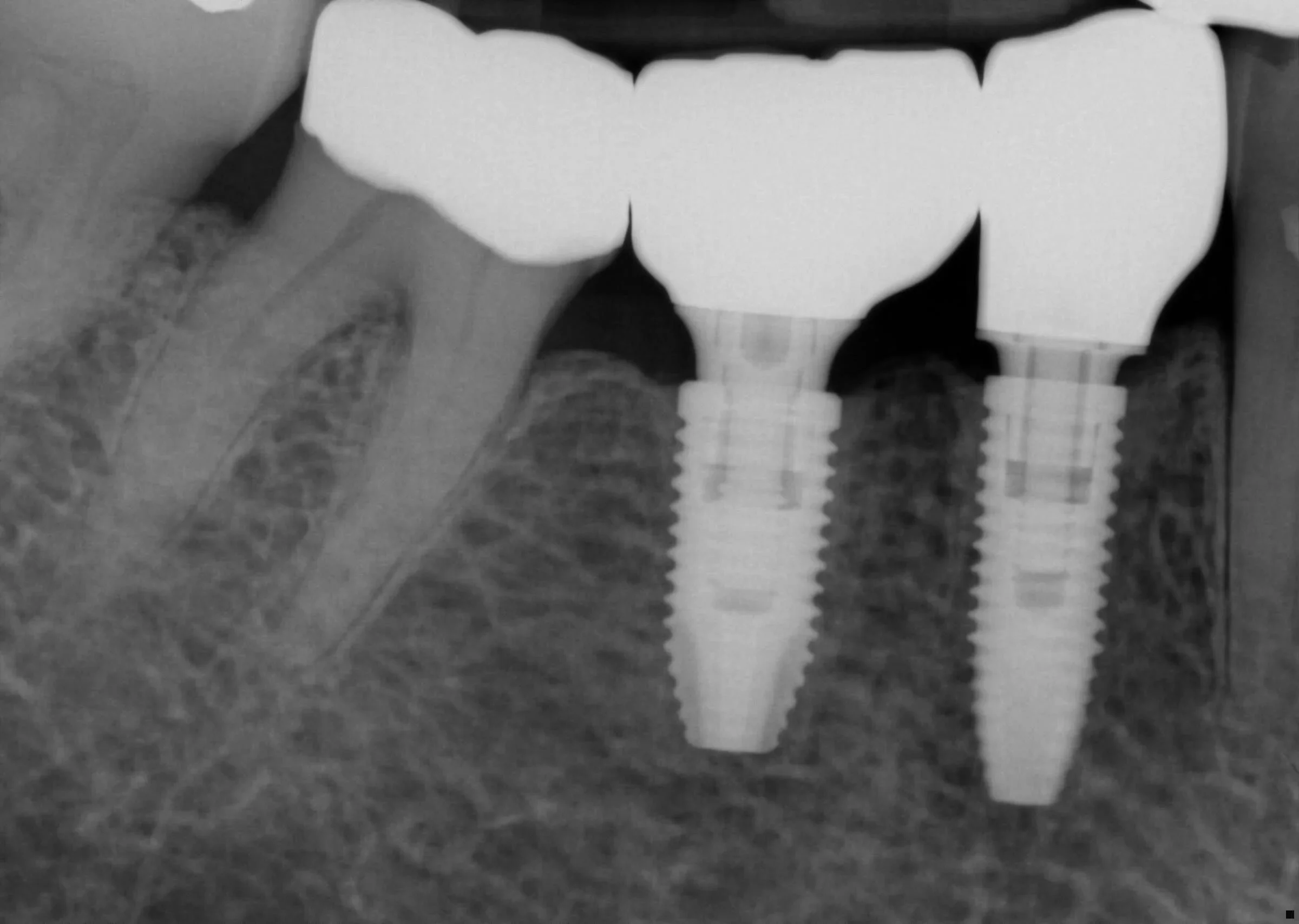
A dental implant is a small titanium post that is surgically placed into the jawbone to replace the root of a missing tooth. Once integrated with the bone — a process called osseointegration — the implant provides a stable, permanent foundation for a crown, bridge, or full-arch prosthesis.
Unlike dentures, which rest on the gum surface and can shift or slip, dental implants are anchored directly into the jaw. They function and feel like natural teeth, allow normal eating and speaking, and do not require support from adjacent teeth. With proper care, dental implants can last a lifetime.
Tooth loss affects more than appearance. When a tooth is lost, the underlying jawbone begins to resorb — gradually shrinking in volume. Dental implants are the only tooth replacement option that stimulates the jawbone, preserving bone density and maintaining facial structure over time.
At Innova Dental, implant treatment is performed by Dr. Onur Cavus, a general dentist with over twenty years of clinical experience and advanced training in implant dentistry, oral surgery, and sedation. All stages of treatment — from initial assessment and surgical placement to final restoration — are completed in our downtown Toronto clinic.
Good Candidates for Implants
Adults with one or more missing teeth
Patients with healthy gums and adequate jawbone volume
Non-smokers or patients willing to quit prior to surgery
Patients without uncontrolled diabetes or autoimmune conditions
Those seeking a permanent, fixed alternative to dentures
Patients with failing or non-restorable teeth
Bone volume is not always a barrier. Patients with insufficient bone for implant placement may still be candidates following bone grafting or sinus lift procedures. A CBCT scan and clinical assessment at our clinic will determine the most appropriate treatment path.
IV sedation is available for patients who prefer to be sedated during implant surgery.
— TREATMENT OPTIONS
Types of Dental Implant
Treatment
Implant treatment is tailored to each patient's clinical situation — the number of missing teeth, bone volume, and overall oral health all inform the recommended approach.
01Single Tooth Implant
A single titanium implant topped with a custom porcelain crown to replace one missing tooth. The implant preserves the adjacent teeth — no grinding down of neighbouring teeth is required, as with a traditional bridge.
Ideal for: one missing tooth with healthy adjacent teeth02Multiple Implants
Two or more implants placed strategically to support individual crowns or an implant-supported bridge. Restores multiple missing teeth without a removable appliance, providing independent, stable tooth replacement.
Ideal for: several missing teeth in one or both arches03Implant-Supported Bridge
Where multiple adjacent teeth are missing, implants at either end of the gap support a fixed bridge — eliminating the need for individual implants at every tooth position while maintaining stability and function.
Ideal for: three or more consecutive missing teeth04Implant-Retained Denture
A removable full or partial denture that attaches to implants via locator attachments or a bar. Provides significantly improved stability and retention compared to conventional dentures, while remaining removable for cleaning.
Ideal for: patients transitioning from conventional dentures05All-on-4 / All-on-X
A full arch of teeth restored on four to six strategically placed implants. A fixed, non-removable prosthesis that functions like natural teeth — eliminating the instability and dietary restrictions of conventional dentures.
Ideal for: full arch tooth loss or failing dentition06Immediate Implants
In selected cases, an implant can be placed immediately following tooth extraction — in the same appointment. This reduces overall treatment time and the number of surgical procedures required when conditions permit.
Ideal for: extraction cases with adequate bone and no infection— TREATMENT JOURNEY
What to Expect
Step by Step
Dental implant treatment is a staged process that typically spans several months. Each stage is carefully sequenced to allow for healing and integration before the next phase begins.
The timeline varies depending on the complexity of the case, whether preparatory procedures such as bone grafting are required, and how quickly osseointegration progresses. Dr. Onur Cavus will outline a personalised treatment timeline at your initial consultation.
IV sedation is available at any surgical stage for patients who prefer a relaxed, anxiety-free experience.
01 Initial Consultation & Assessment
A comprehensive examination including clinical assessment and CBCT (cone beam CT) imaging to evaluate bone volume, density, and anatomy. This imaging allows precise three-dimensional planning of implant position before any surgery begins.
02 Treatment Planning
A detailed treatment plan is developed based on imaging findings, the number and position of missing teeth, and the patient's overall oral health. If bone grafting or preparatory treatment is required, this is planned and discussed at this stage.
03 Preparatory Procedures (if required)
Some patients require bone grafting, sinus lifting, or tooth extraction before implant placement. These procedures rebuild or preserve the bone volume needed to support the implant. A healing period of several months follows before implant surgery.
04 Implant Placement Surgery
The titanium implant is placed into the jawbone under local anaesthesia — with IV sedation available for patients who prefer it. The procedure typically takes 30 to 90 minutes depending on the number of implants. A healing cap or temporary restoration may be placed at this appointment.
05 Osseointegration — Healing Period
Over the following three to six months, the titanium implant fuses with the surrounding bone in a process called osseointegration. This biological bonding creates the stable foundation on which the final restoration is built. A temporary restoration can be worn during this period.
06 Abutment Placement
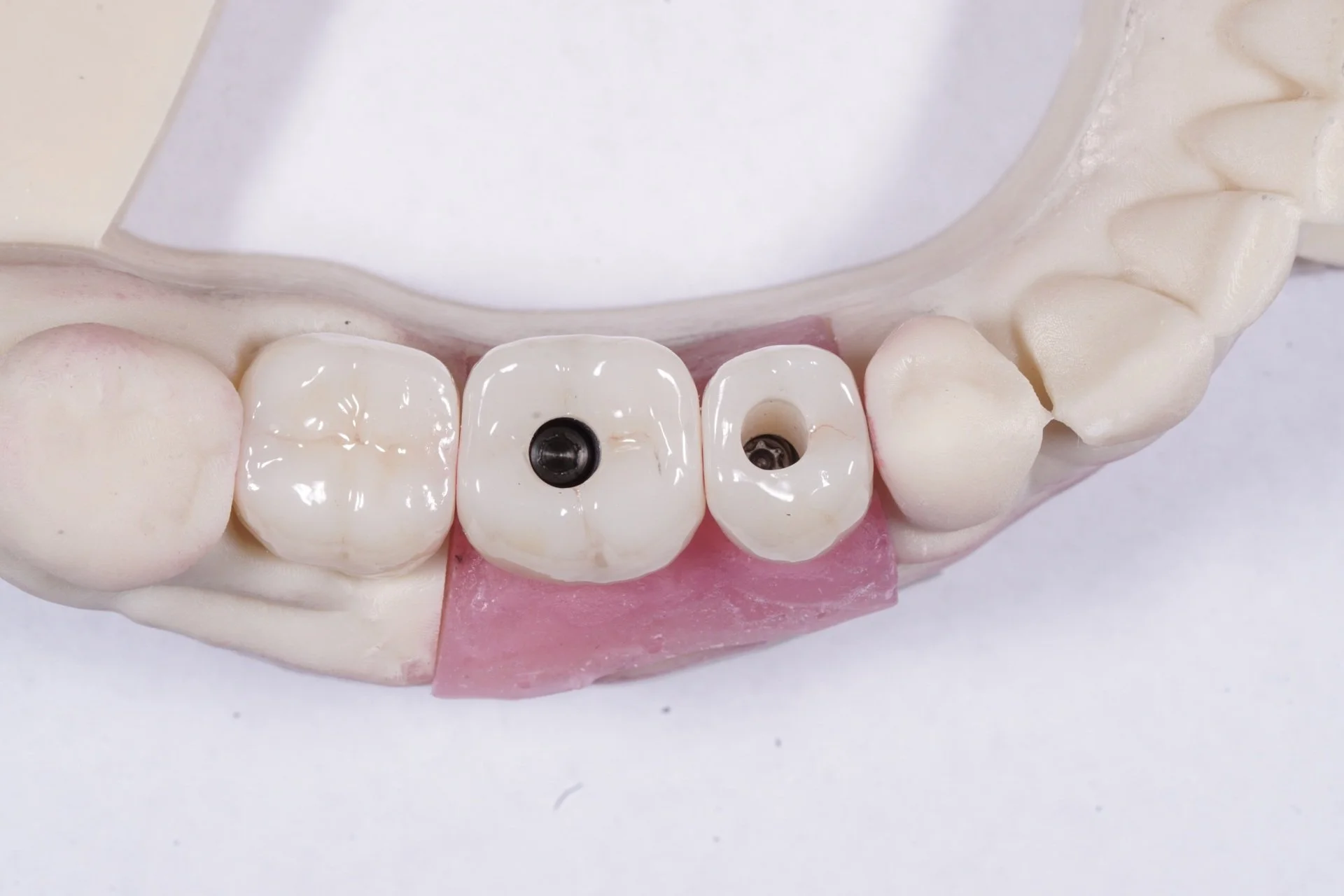
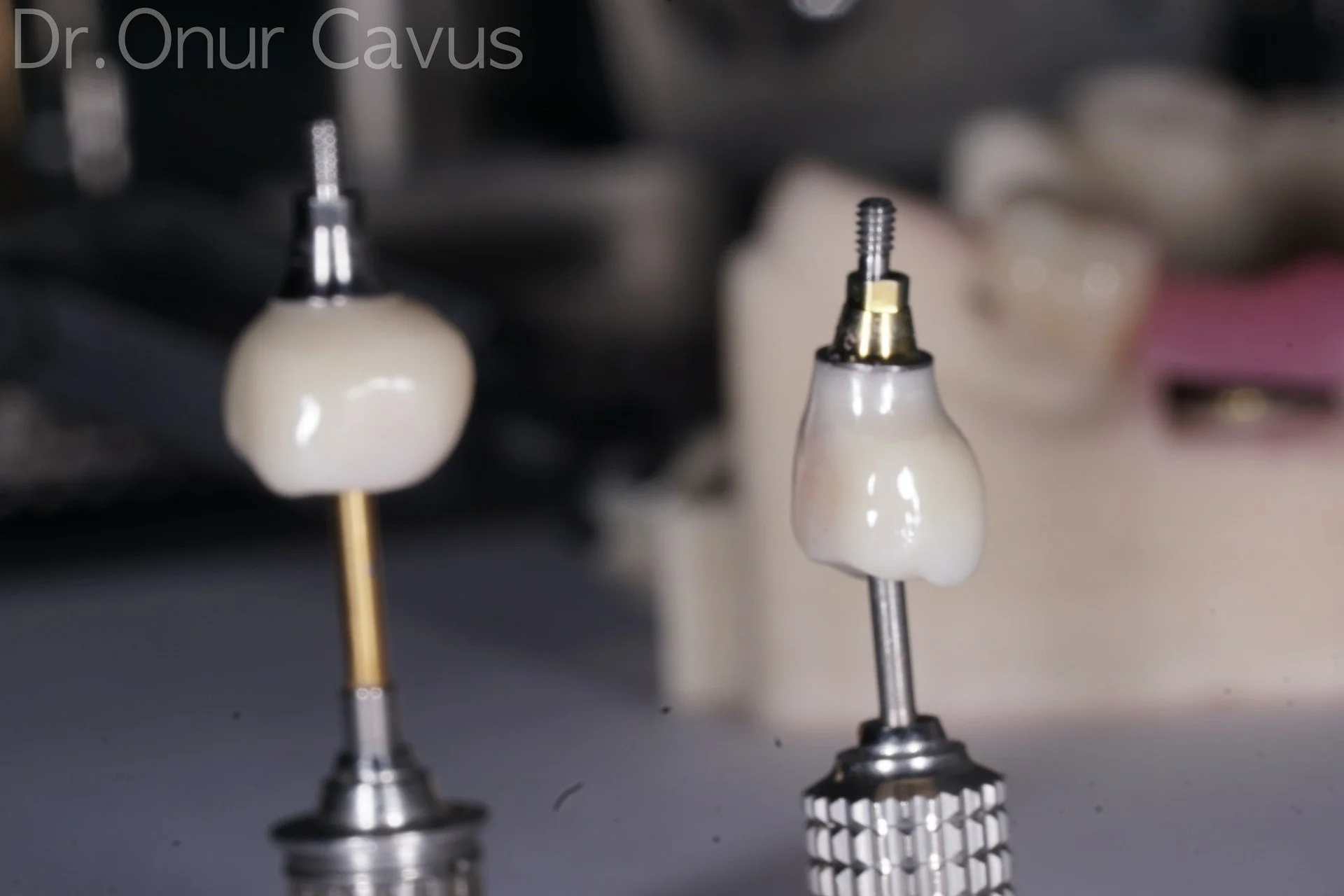
Once osseointegration is confirmed, a small connector called an abutment is attached to the implant. The abutment serves as the interface between the implant and the final crown, bridge, or prosthesis. Impressions or digital scans are taken at this stage for the final restoration.
07 Final Restoration
The custom-made crown, bridge, or prosthesis is fitted and adjusted to ensure correct bite alignment and aesthetics. The result is a natural-looking, fully functional tooth replacement that integrates seamlessly with the surrounding teeth.
— AM I A CANDIDATE?
Who Is Suitable for
Dental Implants?
Most healthy adults who are missing one or more teeth are potential candidates for dental implants. The following factors support a successful outcome:
Sufficient jawbone volume and density to support the implant
Healthy gum tissue free of active periodontal disease
Good general health without conditions that significantly impair healing
Non-smoking or willingness to stop smoking prior to and during healing
Completed jawbone development — implants are not placed in growing patients
Commitment to maintaining good oral hygiene post-treatment
Realistic expectations about the treatment timeline
When Bone Grafting May Be Needed
If bone has been lost following tooth extraction or long-term tooth absence, a bone graft may be required before implant placement. Grafting rebuilds bone volume at the implant site, allowing successful integration. This adds time to the overall treatment but expands candidacy significantly.
Managed Medical Conditions
Patients with well-controlled diabetes, osteoporosis, or other systemic conditions may still be candidates for implants. A thorough medical review is conducted at the initial consultation to assess risk and plan accordingly. Uncontrolled conditions may require medical optimisation before treatment begins.
Medications to Disclose
Certain medications — including bisphosphonates, blood thinners, and immunosuppressants — may affect implant outcomes and surgical planning. All current medications should be disclosed at the consultation.
— CLINICAL RESULTS
Before & After
Dental Implants
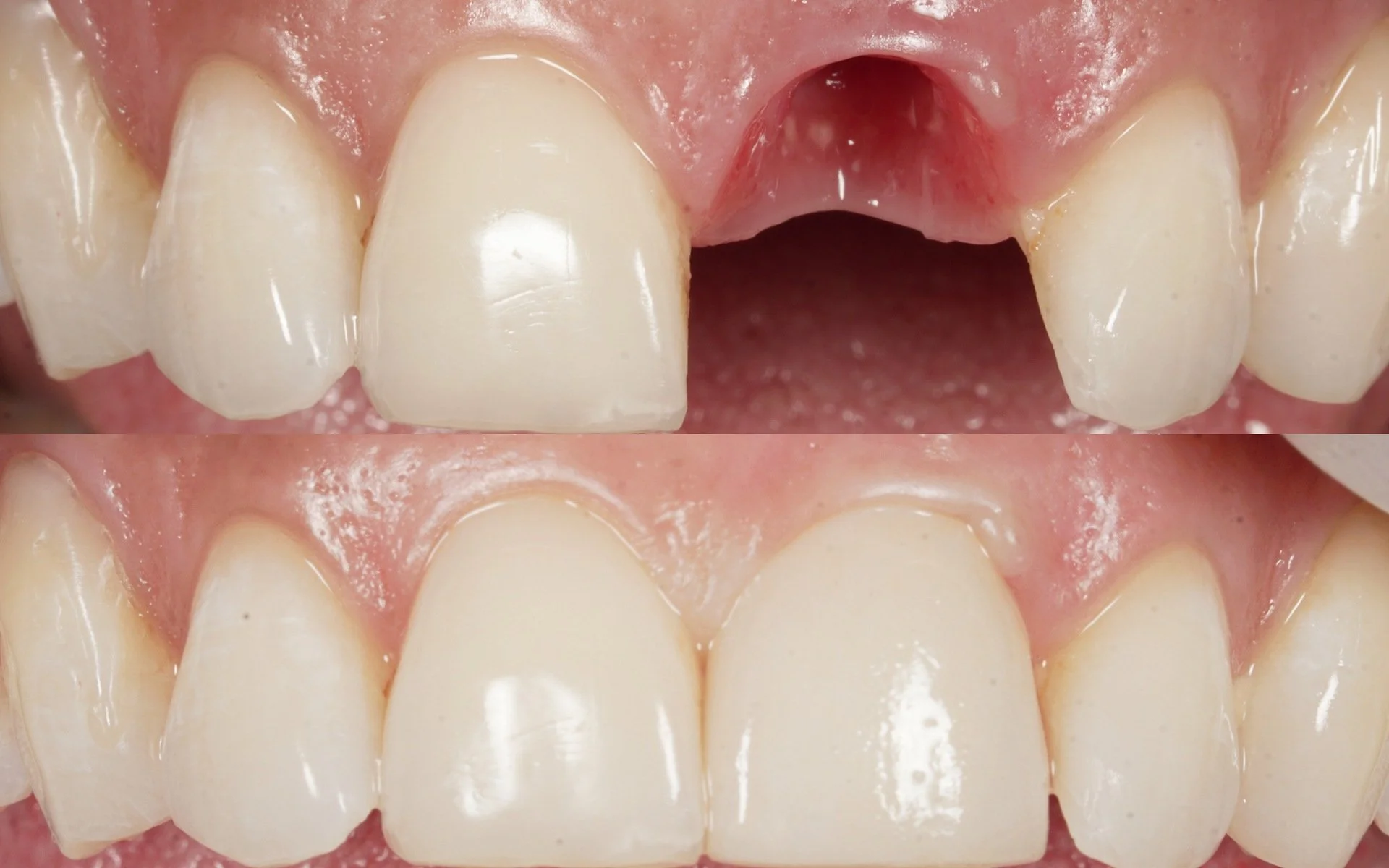
Replacement of a missing upper front tooth with a natural-looking dental implant crown. View the full case documentation at ImplantDentistryToronto.ca
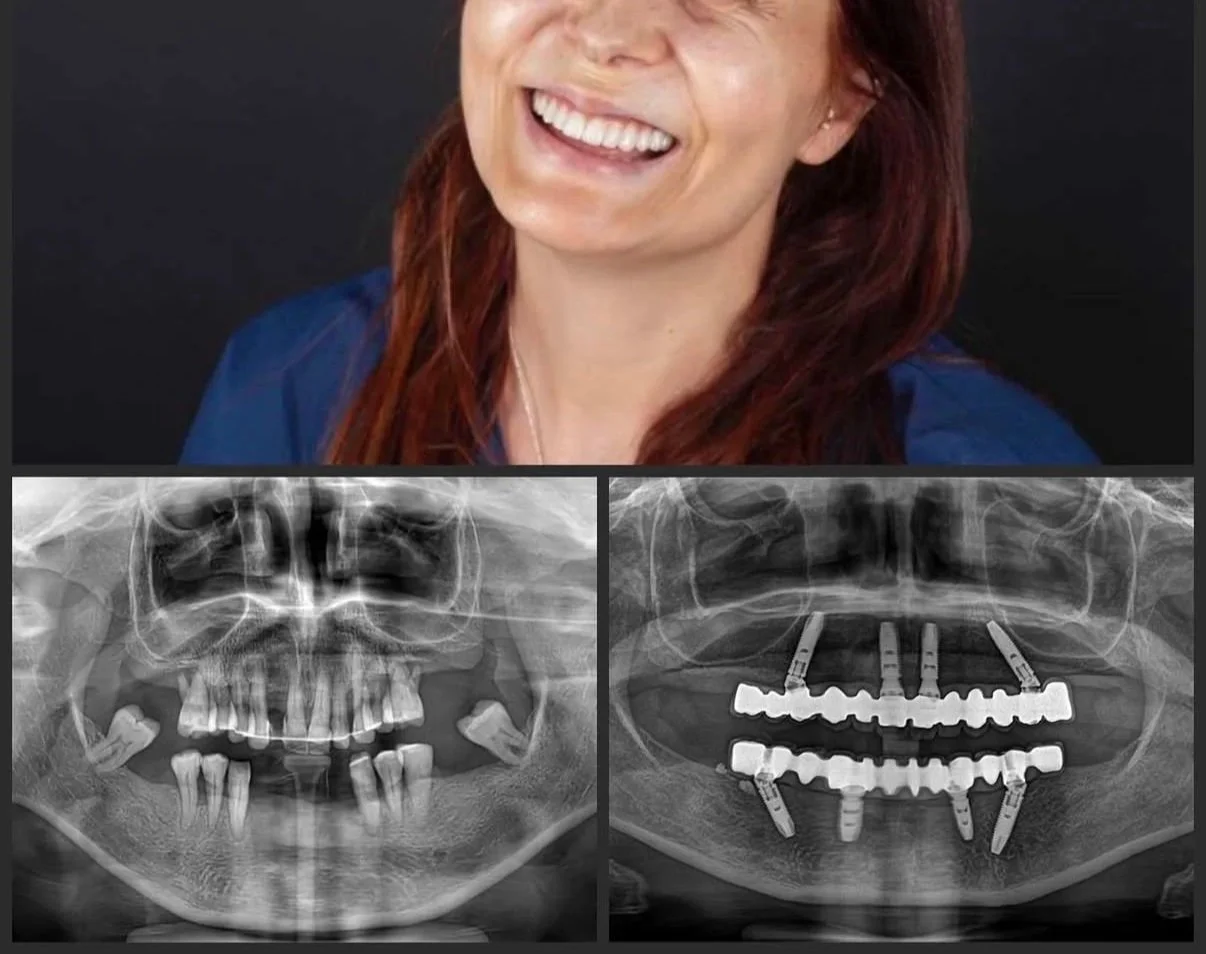
Before and after panoramic X-rays showing all-on-4 full mouth dental implant restoration.
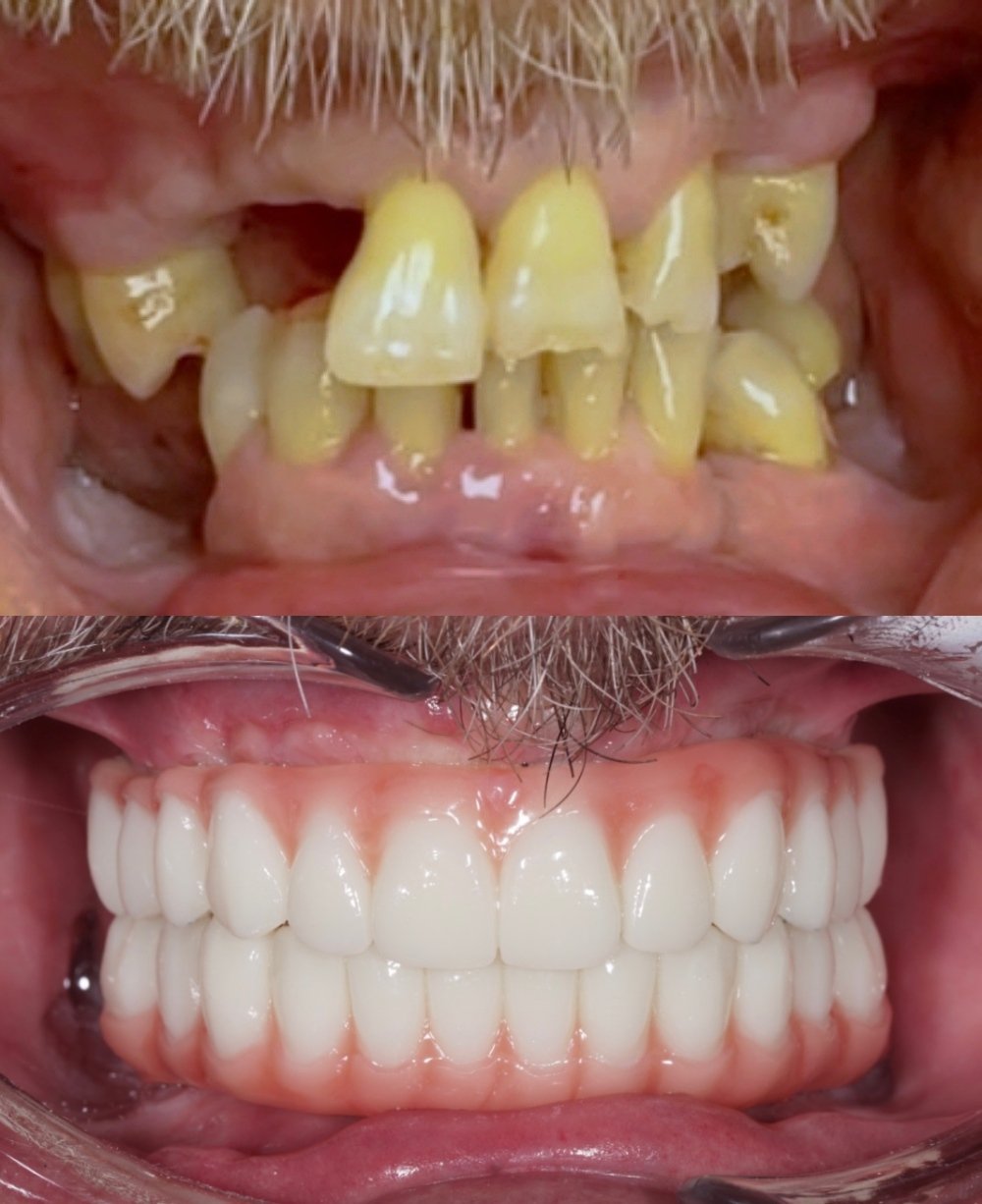
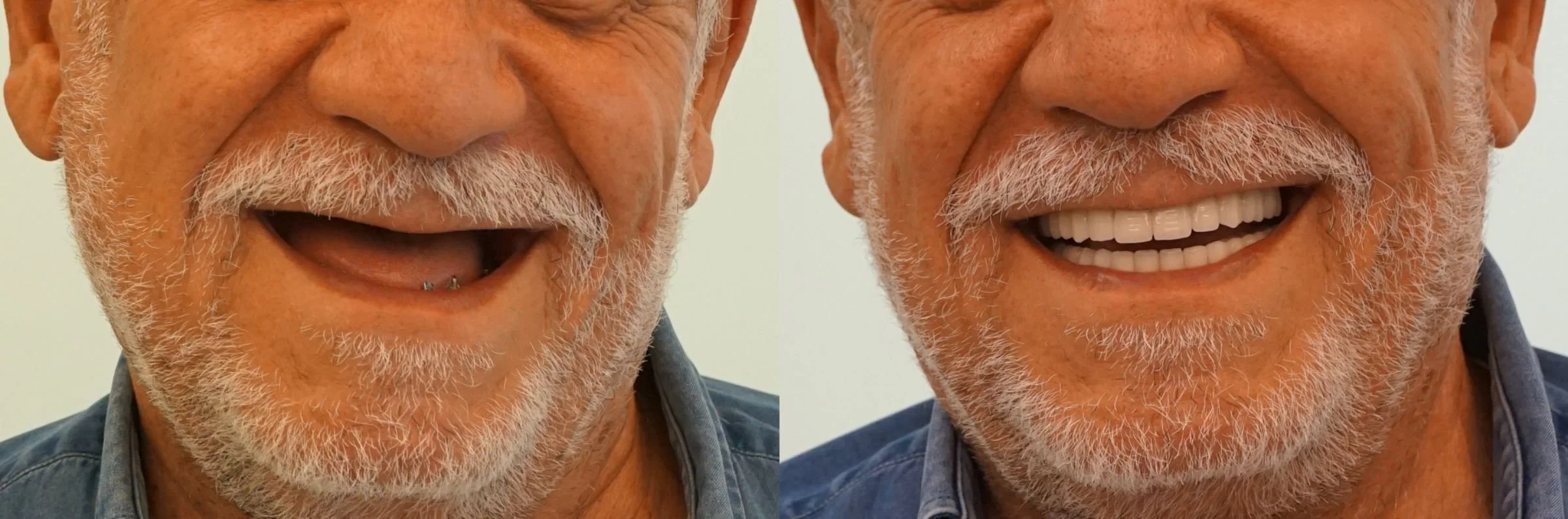
Before and after all-on-x full-arch dental implant restorations replacing severely damaged and missing teeth with a fixed implant-supported prosthesis.
— CLINICAL EDUCATION
Detailed Implant Case
Documentation & Education
For patients researching implant dentistry in greater clinical depth — including documented surgical cases, treatment planning principles, bone grafting, and full-arch rehabilitation — detailed educational resources are available at ImplantDentistryToronto.ca.
Implant Surgery & Cases
Surgical case documentation including single implants, immediate placement, and complex reconstructions.
Full-Arch Rehabilitation
All-on-4 and All-on-X case documentation, treatment planning, and patient selection criteria.
— FAQ
Dental Implant
Questions
Have a question not answered here? Contact us directly — we're happy to help.
-
With proper oral hygiene and regular dental visits, the implant fixture itself can last a lifetime. The crown or prosthesis on top typically lasts 15 to 25 years before it may need replacement due to normal wear. Success rates of over 95% at 10 years are consistently reported in clinical literature.
-
The procedure is performed under local anaesthesia and patients typically report less discomfort than anticipated. IV sedation is available at Innova Dental for patients who prefer to be sedated during the surgery. Post-operative discomfort is generally manageable with over-the-counter pain relief and subsides within a few days.
-
A straightforward single implant case — without the need for bone grafting — typically takes three to six months from surgery to final crown placement, allowing for the osseointegration healing period. Cases requiring preparatory bone grafting or sinus lifting add additional time. Complex full-arch cases may take six to twelve months in total. Your specific timeline will be outlined at the initial consultation.
-
You can reach us anytime via our contact page or email. We aim to respond quickly—usually within one business day.Coverage varies significantly by insurance plan. Some plans provide partial coverage for implant components — the crown, the abutment, or occasionally the surgical fee. Many plans categorise implants under major restorative benefits with an annual maximum. We recommend contacting your insurance provider to confirm your coverage before beginning treatment. We can provide a detailed treatment plan to submit for a pre-determination of benefits.
-
A traditional bridge replaces a missing tooth by crowning the teeth on either side of the gap and suspending a false tooth between them. This requires permanent alteration of healthy adjacent teeth. A dental implant replaces the missing tooth independently — without involving neighbouring teeth — and preserves the underlying jawbone. Implants are generally considered the superior long-term solution where bone volume permits.
-
In selected cases — particularly full-arch All-on-4 and All-on-X cases — a provisional fixed prosthesis can be placed on the same day as surgery, allowing patients to leave with functioning teeth. This is sometimes referred to as "teeth in a day." The final definitive prosthesis is placed later once osseointegration is complete. Not every patient is a candidate for same-day loading — bone quality and quantity are key determining factors.
-
Yes. Innova Dental offers IV sedation for implant surgery and all other surgical procedures. Sedation is administered by Dr. Onur Cavus, who holds Ontario certification for moderate IV sedation. Patients who choose sedation are monitored throughout the procedure and require a responsible adult to accompany them home afterward.
-
When a tooth is lost, the jawbone beneath it begins to resorb — losing volume over time. Adjacent teeth may drift into the space, altering the bite and creating areas that are difficult to clean. The loss of bone volume can affect facial appearance over the long term. Replacing missing teeth promptly with implants or another prosthetic option preserves bone and prevents these secondary effects.
— BOOK A CONSULTATION
Ready to Restore
Your Smile?
Innova Dental offers dental implant consultations in downtown Toronto. Dr. Onur Cavus will assess your suitability, review your imaging, and outline a personalised treatment plan.