

— BONE GRAFTING - TORONTO
Bone Grafting in Toronto
When bone loss has occurred from tooth extraction, gum disease, or years of wearing a denture, a bone graft rebuilds the foundation needed for a successful dental implant — or to preserve your jaw's natural structure long-term.
Socket preservation, sinus lifts, ridge augmentation, and guided bone regeneration at Innova Dental in downtown Toronto. Performed by Dr. Onur Cavus, with 20+ years of clinical experience and a focused scope of practice in implant dentistry and oral surgery. IV sedation available.
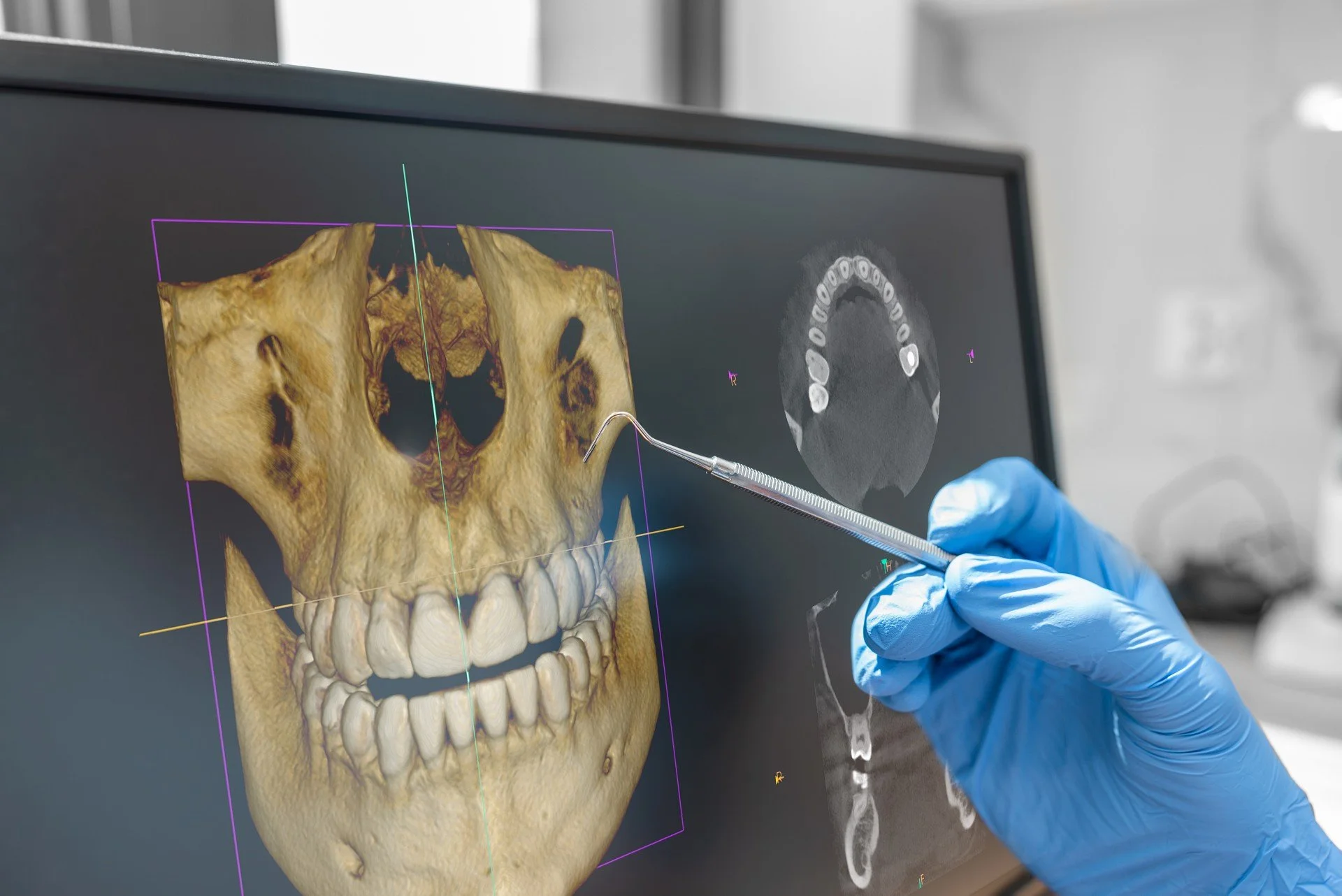
CBCT
3D imaging for precise surgical planning
20+
Years of clinical experience including complex bone grafting
IV
Sedation available for bone grafting procedures
— WHY BONE VOLUME MATTERS
When Bone Loss
Needs to Be Addressed
Bone in the jaw does more than anchor teeth — it defines the contours of your face, supports your bite, and maintains the structural integrity of neighbouring teeth. When a tooth is lost, the surrounding bone begins to resorb. Within the first year, up to 25% of bone width can be lost. Over time, this can affect facial appearance, make implant placement difficult, and compromise the teeth on either side.
Bone grafting halts this process and — depending on timing — can reverse it. At Innova Dental, bone grafting is performed by Dr. Cavus, with 20+ years of clinical experience and a focused scope of practice in implant dentistry and oral surgery. All procedures are supported by CBCT (cone beam CT) imaging for three-dimensional surgical planning.
Common Reasons for Bone Grafting
Preparing the jaw for a dental implant after tooth loss
Preserving the socket immediately after tooth extraction
Insufficient bone height in the upper jaw for implant placement
Significant bone loss from longstanding tooth absence
Bone loss caused by advanced gum disease
Rebuilding bone lost after tooth removal due to infection or trauma
Augmenting bone around an implant site with a marginal deficiency
Procedures Offered at Innova Dental
Socket preservation (alveolar ridge preservation)
Sinus lift — lateral window and crestal (transcrestal) approaches
Ridge augmentation
Guided bone regeneration (GBR) with barrier membranes
Implant site development for complex cases
Timing matters. Socket preservation performed at the time of tooth extraction is the most effective way to prevent bone loss before it begins. If extraction is in your near future, ask about socket preservation before your appointment — it is far simpler than correcting resorption after the fact.
— TREATMENT OPTIONS
Types of
Bone Grafting Procedure
Each procedure addresses a different clinical need and point in the implant treatment timeline. Detailed explanations of each are provided in the sections below.
01SOCKET PRESERVATION
Performed at the time of tooth extraction to prevent the socket from collapsing and the surrounding bone from resorbing.
Performed at the time of extraction
Prevents bone collapse before it begins
Dramatically improves future implant site conditions
Minimal additional procedure time
02SINUS LIFT
Creates vertical bone height in the upper back jaw when the maxillary sinus sits too close to the ridge for implant placement. Both lateral window and crestal approaches available.
For upper premolar and molar implant sites
Lateral window approach for larger lifts
Crestal approach for modest lifts
Simultaneous implant placement possible in select cases
03RIDGE AUGMENTATION
Rebuilds jaw width and height after significant bone loss from longstanding tooth absence, prior infection, or advanced gum disease. Often the key that makes implant placement possible.
For collapsed or narrow jaw ridges
Restores both function and contour
Block grafts available for severe deficiency
4–6 months healing before implant placement
04GUIDED BONE REGENERATION (GBR)
Uses barrier membranes to isolate a graft site and direct new bone formation, excluding soft tissue from migrating into the defect. Often used in combination with implant placement or ridge augmentation.
Resorbable and non-resorbable membranes available
Targets localised defects around implant sites
Often combined with other grafting procedures
Staged or simultaneous with implant placement
— BONE GRAFTING
Socket Preservation
Socket preservation is recommended for almost anyone undergoing tooth extraction who is considering a dental implant — now or in the future. Without intervention, the socket collapses and surrounding bone begins to resorb within weeks. Preventing this is far simpler than correcting it later.
Immediately following extraction, the socket is cleaned and bone graft material is placed to fill the void left by the removed root. A collagen membrane is placed over the opening to contain the graft, and the gum tissue is gently sutured closed. The procedure adds minimal time to the extraction appointment and is performed under the same local anaesthesia.
IV sedation is available for patients who prefer it.
RECOVERY
Mild swelling and tenderness for 3–5 days
Soft diet for the first week
Sutures dissolve or are removed at a follow-up visit
Bone maturation: 3–4 months before implant placement
LONG-TERM OUTCOMES
Significantly reduced bone resorption versus unpreserved sockets
Improved implant site conditions at the time of placement
May reduce or eliminate the need for larger grafting later
Better preservation of gum contour around the future implant
— BONE GRAFTING
Sinus Lift
When upper back teeth are lost, the maxillary sinus expands downward — often leaving insufficient bone height for implants. A sinus lift elevates the sinus membrane and introduces bone graft material beneath it to restore this height. Both lateral window and crestal (transcrestal) approaches are available at Innova Dental, matched to your anatomy from CBCT imaging.
Sinus lifting is a complex procedure with its own clinical detail, surgical decision points, and post-operative protocols. It has a dedicated page with full explanations of both approaches, the simultaneous vs. staged placement decision, sedation options, and FAQ.
AT A GLANCE
For upper premolar and molar implant sites
Lateral window approach: for significant bone deficiency (<4–5mm)
Crestal approach: for modest deficiency, often with simultaneous implant
6–9 months healing for lateral window cases before implant placement
— BONE GRAFTING
Ridge Augmentation
Ridge augmentation addresses significant bone loss that has already occurred — whether from longstanding tooth loss, advanced gum disease, tooth removal due to infection, or trauma. When the jaw ridge has collapsed or narrowed to the point where implants cannot be placed, ridge augmentation rebuilds it.
The gum tissue is gently reflected to expose the ridge. Bone graft material — in quantities appropriate to the defect — is placed along the ridge and stabilized. A barrier membrane typically protects the graft and guides new bone formation. The site is then closed with sutures.
In cases of severe deficiency, block grafts — solid sections of bone, often autogenous — may be secured with titanium fixation screws before being covered with membrane and soft tissue.
Recovery & Healing Timeline
Swelling and tenderness for 5–7 days
Soft diet for 2 weeks; full chewing restrictions during early healing
Healing and bone maturation: 4–6 months depending on graft volume
Follow-up CBCT confirms bone density before implant planning resumes
IV sedation recommended; procedure typically 1–2 hours
If you've been told you have insufficient bone for implants, ridge augmentation is often the answer. Most cases of bone loss — even significant — are addressable. A CBCT consultation will clarify the extent of grafting required and the realistic implant timeline.
— BONE GRAFTING
Implant Site Development & Guided Bone Regeneration
Guided bone regeneration (GBR) uses a barrier membrane placed over graft material to exclude soft tissue cells from migrating into the defect site. This allows slower-growing bone cells to populate the space undisturbed — directing the body's own regenerative capacity toward bone formation rather than soft tissue fill.
GBR is used when a specific area around an implant site — or a planned implant site — lacks sufficient volume. It is frequently performed simultaneously with implant placement for minor defects, or staged prior to placement for more significant ones.
Resorbable membranes (collagen-based) dissolve naturally and require no second surgery for removal. Non-resorbable membranes (titanium-reinforced PTFE) offer structural support for larger defects but require a second procedure for removal at 4–6 months.
When GBR Is Used
Buccal dehiscences where bone does not fully envelop the implant
Simultaneously with implant placement for minor bone deficiencies
Staged prior to implant placement for more significant defects
Sites with localised bone loss from prior infection or failed implants
In combination with ridge augmentation for complex reconstruction
Recovery
Recovery follows the underlying procedure (implant placement or ridge augmentation)
Membrane exposure is a possible complication — prompt follow-up minimises risk
Non-resorbable membranes removed at 4–6 months under local anaesthesia
Final restoration proceeds after osseointegration is confirmed
— GRAFT MATERIALS
What Are Bone
Grafts Made From?
Graft material is selected based on the site, volume required, medical history, and clinical judgment. Materials are frequently combined for optimal results. All graft materials used at Innova Dental are sourced from established clinical suppliers and are regulated for quality and safety.
AUTOGRAFT
Your own bone, harvested from another site (chin, ramus, or elsewhere). The biological gold standard for integration — though it requires a second surgical site.
XENOGRAFT
Bovine or porcine-derived bone mineral. An excellent scaffold for new bone formation, with an extensive evidence base in the implant literature.
ALLOGRAFT
Processed donor bone from a certified human tissue bank. Widely used, well-tolerated, and eliminates the need for a second surgical site.
ALLOPLAST
Fully synthetic and biocompatible. A strong option for patients who prefer non-biological graft sources, available in various formulations.
— SEDATION OPTIONS
Comfortable from
Start to Finish
Bone grafting is a surgical procedure, and not every patient approaches oral surgery with ease. At Innova Dental, IV sedation is available for all bone grafting procedures — from socket preservation to sinus lifts and ridge augmentation.
IV sedation produces a deeply relaxed, amnesic state. Most patients have little or no recollection of the procedure. You remain responsive but are entirely comfortable throughout. A responsible adult must accompany you to and from the appointment.
LOCAL ANESTHESIA ONLY
Standard for socket preservation and appropriate for many grafting cases. The area is completely numb. You are awake and aware but should feel no pain — only pressure and movement.
IV SEDATION + LOCAL ANAESTHETIC
Intravenous sedation administered and monitored by Dr. Cavus, who holds RCDSO certification as a moderate IV sedation provider. Produces a deep, amnesic level of relaxation. Escort required.
— WHAT TO EXPECT
From Consultation
to Implant Placement
Bone grafting at Innova Dental follows a structured clinical process. The consultation and the procedure are always separate appointments, allowing time for imaging review, treatment planning, and sedation discussion.
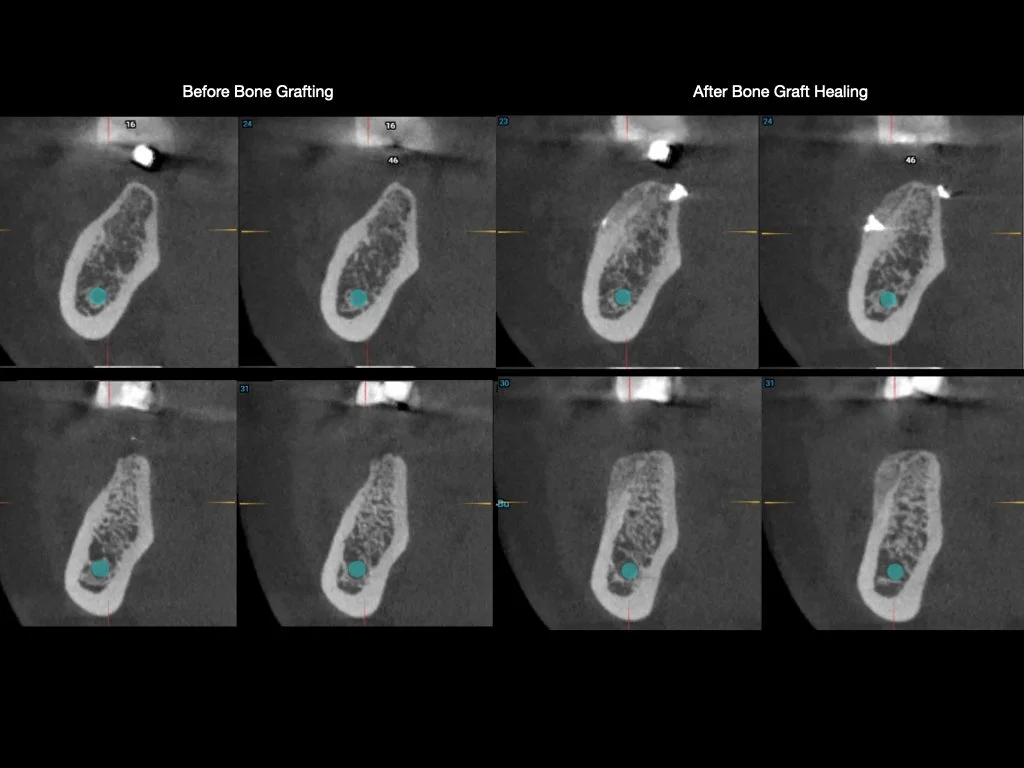
Healing is never assumed — follow-up imaging confirms readiness at every stage before the next step proceeds.
01 Consultation & CBCT Imaging
A clinical examination and cone beam CT (CBCT) scan assesses bone volume, density, and proximity to anatomical structures including the sinus and inferior alveolar nerve. This three-dimensional imaging is essential for surgical planning and eliminates guesswork that flat X-rays cannot resolve.
02 Treatment Planning
The recommended procedure is explained, including the type and source of graft material, expected healing time, and how it fits into the overall implant plan. Sedation options are discussed and a preference recorded. Fasting requirements apply if IV sedation is chosen. Consent is obtained before the procedure appointment is booked.
03 Surgical Appointment
Local anaesthetic is administered; IV sedation if chosen. The graft site is prepared, material placed and stabilized, a barrier membrane positioned if indicated, and the site closed with sutures. Most procedures take between 45 and 90 minutes. Written post-operative instructions are provided before discharge.
04 Healing & Integration (3–9 months)
New bone formation takes time. Healing typically spans 3 to 6 months for socket preservation and ridge augmentation, and 6 to 9 months for larger sinus lifts. A follow-up appointment at approximately 6–8 weeks assesses early healing. CBCT imaging at the appropriate interval confirms bone maturation before implant planning resumes.
05 Implant Placement
Once healing is confirmed, implant placement proceeds. In select cases — when primary implant stability can be achieved — placement is performed simultaneously with the graft at the original surgical appointment. Your surgeon determines the appropriate approach at the planning stage based on imaging and clinical assessment.
— FAQ
Bone Grafting
Questions
Have a question not answered here? Contact us directly — we're happy to help.
-
The procedure is performed under local anaesthesia — you will feel pressure and movement but not pain. Post-operative discomfort is typically manageable with over-the-counter analgesics and any prescription provided at discharge. Swelling peaks around 48–72 hours and subsides over the following week. IV sedation makes the procedure itself a non-event for most patients.
-
Socket preservation grafts placed at extraction typically require 3–4 months of healing. Ridge augmentation cases generally require 4–6 months. Larger lateral window sinus lifts may require 6–9 months. Follow-up CBCT imaging confirms readiness — healing is never assumed, always verified before the next stage proceeds.
-
In select cases, yes. Simultaneous placement is possible when sufficient primary implant stability can be achieved. For sinus lifts with adequate existing bone height, and for GBR at minor defect sites around an implant, simultaneous placement is routine. Your surgeon will determine the appropriate approach based on imaging and bone quality at the site.
-
In most cases, yes. Patients are commonly told they lack sufficient bone without a detailed discussion of grafting options. Ridge augmentation, sinus lifting, and GBR exist precisely to address this — and most cases of bone loss, even significant, are addressable with proper planning. A CBCT consultation will clarify what is involved and whether implants are a realistic goal for your situation.
-
The appropriate material depends on the site, volume required, your medical history, and clinical judgment. Options include autograft (your own bone), allograft (donor bone), xenograft (bovine-derived), and alloplastic (synthetic) materials. In many cases, materials are combined. Your surgeon will explain the recommended approach at your consultation, including any preferences or considerations specific to your situation.
-
Coverage varies by plan. Socket preservation performed at the time of extraction is covered under some plans; others treat grafting as a separate item. Sinus lifts and ridge augmentation may have their own benefit categories. Our treatment coordinator can prepare a predetermination letter to submit to your insurer before treatment begins.
About Bone GraftingBone grafting is a surgical procedure that rebuilds or preserves jaw bone volume lost through tooth extraction, gum disease, trauma, or prolonged tooth loss. Common types include socket preservation (performed at the time of extraction to prevent socket collapse and bone resorption), sinus lift or maxillary sinus augmentation (for upper back jaw implant sites where sinus proximity limits bone height), ridge augmentation (for rebuilding jaw width and height after significant bone loss), and guided bone regeneration (GBR) using barrier membranes to isolate graft sites and direct new bone formation. Graft materials may be autogenous (the patient's own bone), allograft (donor bone from a tissue bank), xenograft (bovine-derived), or alloplastic (synthetic). Healing typically spans 3 to 9 months depending on procedure type before dental implants can be placed. Bone grafting is performed by oral surgeons, periodontists, and implant-trained dentists.— BOOK A CONSULTATION
Rebuilding the Foundation
for a Lasting Smile
If you've been told you don't have enough bone for implants — or if you've recently had a tooth extracted — a consultation will clarify your options. Most bone loss is addressable.