
— FULL ARCH IMPLANTS — TORONTO
All-on-4 & All-on-X Full Arch
Implants in Toronto
Permanent, fixed teeth for patients who have lost — or are losing — a full arch of teeth. All-on-X replaces the entire upper or lower arch on four to six implants, eliminating removable dentures and restoring full function. Available at Innova Dental in downtown Toronto, with IV sedation for a comfortable surgical experience.
4-6Implants support a complete fixed arch of teeth
20+Years of clinical experience including complex implant surgery
IVSedation available for all implant procedures
— WHAT IS ALL-on-X?
All-on-X is a full arch dental implant technique in which an entire upper or lower set of teeth is permanently supported by a small number of implants — typically four to six — placed strategically in the jaw.
The "X" in All-on-X refers to the variable number of implants used. The posterior implants are often angled to access denser bone while avoiding the sinus cavity (upper jaw) or the inferior alveolar nerve (lower jaw). This angled placement is what makes the technique viable even in patients with reduced bone volume — a common barrier to conventional implant treatment.
Unlike removable dentures, the prosthetic arch is fixed directly to the implants and does not come out. In many cases, patients receive a provisional (temporary) full arch on the same day as surgery — a workflow frequently referred to as "teeth in a day" or "same-day teeth." The definitive, final prosthesis is fitted several months later once the implants have fully integrated with the bone.
A Fixed Arch of Teeth
on Four to Six Implants
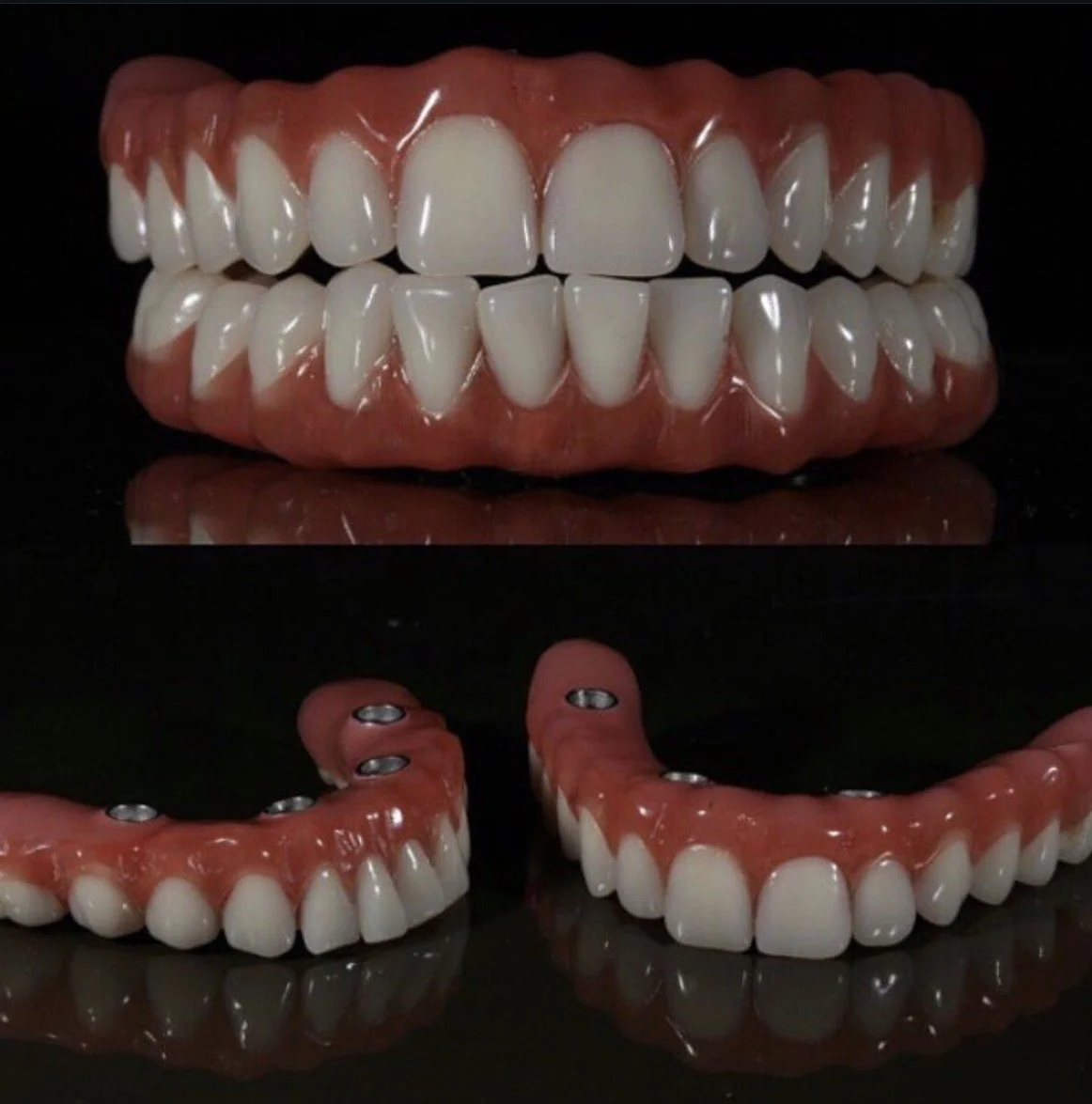
All-on-X is indicated for patients who are fully or partially edentulous — toothless — or who have teeth that are failing and cannot be saved. It eliminates the need for traditional removable dentures while restoring full chewing function, natural aesthetics, and jawbone stimulation. The implants themselves integrate with the bone in a process called osseointegration, anchoring the prosthesis permanently and helping to preserve the jaw's shape and density over time. In appropriately selected patients, All-on-X full arch implants can function for 20 years or more with proper maintenance.
— WHO IS IT FOR?
Are You a Candidate
for All-on-X?
All-on-X is designed for patients with significant tooth loss — or facing the imminent loss of most remaining teeth. The technique was developed in part to serve patients who had been told conventional implants were not possible due to insufficient bone. By using angled implants that engage denser areas of the jaw, All-on-X frequently avoids the need for bone grafting that conventional implant placement would require.
Candidacy is confirmed through a clinical assessment and CBCT scan at Innova Dental. A CBCT provides a precise three-dimensional view of your bone volume, density, and anatomy before any treatment plan is finalised.
YOU MAY BE A CANDIDATE IF YOU
Have lost most or all teeth on your upper or lower arch — or both
Wear a removable full denture and want a fixed, permanent alternative
Have multiple failing, infected, or non-restorable teeth
Have been told you lack sufficient bone for conventional individual implants
Want to avoid years of staged individual implant surgeries
Are in good general health and are a non-smoker, or willing to stop smoking prior to surgery
Can commit to the staged treatment timeline and follow-up appointments
Told you don't have enough bone? Patients who have been advised they are not candidates for conventional implants due to bone loss are often still suitable for All-on-X. The angled posterior implants access regions of denser bone — particularly in the upper jaw and the anterior mandible — reducing or eliminating the need for bone grafting.
A CBCT scan will give Dr. Cavus the three-dimensional information required to assess this accurately before any decisions are made.
— IMPLANT CONFIGURATIONS
All-on-4 vs All-on-6:
What's the Difference?
The right number of implants is determined by your anatomy — not a package. Your CBCT imaging, jaw size, bite forces, and planned prosthesis material all inform the configuration Dr. Cavus recommends.
CONFIGURATION 01All-on-4
Four implants support the full arch — two placed vertically at the front of the jaw and two angled posteriorly at approximately 30 to 45 degrees. The angled placement accesses denser bone while avoiding the sinus cavity (upper arch) or the inferior alveolar nerve (lower arch). All-on-4 is the standard and most widely used configuration, appropriate for the majority of patients.
Two straight anterior implants, two angled posterior implants
Angled placement maximises bone contact and avoids anatomical structures
Often eliminates the need for sinus lifting in the upper jaw
Well-supported by long-term clinical evidence
Appropriate for most edentulous or near-edentulous patients
CONFIGURATION 02All-on-6
Six implants provide additional posterior support and improved load distribution across the arch. This configuration is often recommended for patients with a larger jaw span, higher bite forces, or when a zirconia (full-ceramic) prosthesis is planned — as the greater weight and rigidity of zirconia benefits from more fixation points.
Two additional implants in the posterior region
Better load distribution — useful for larger jaws or heavy bite forces
Often preferred when a zirconia final prosthesis is planned
May be indicated when bone density supports additional fixation
Discussed and determined at the CBCT-based planning appointment
— PROSTHESIS OPTIONS
Acrylic or
Zirconia?
Your All-on-X prosthesis — the arch of teeth attached to your implants — can be fabricated from different materials. Each has distinct properties, durability characteristics, and cost implications. The choice is made in discussion with Dr. Cavus at your planning consultation, taking into account your bite anatomy, aesthetic priorities, and budget.
Both materials produce a natural-looking, full-arch result. The primary differences relate to repairability, weight, longevity, and cost.
Provisional prosthesis. In most same-day cases, the arch fitted on surgery day is a provisional (temporary) prosthesis — typically acrylic — worn during the three-to-six month osseointegration period. The choice of definitive material for the final prosthesis is finalised once healing is confirmed.

OPTION 01Acrylic (PMMA) on Metal Framework
The most widely used material for All-on-X prostheses. Acrylic sits on a titanium or cobalt-chrome framework, producing a natural-looking arch that is repairable if a tooth chips and is lighter in weight than zirconia.
Advantages
Repairable — individual teeth can be replaced if damaged
More affordable than zirconia
Lighter — less load on the implants
Natural appearance and good aesthetics
Considerations
More susceptible to staining over time
May show wear with very heavy bite forces
OPTION 02Zirconia (Monolithic or Layered)
A full-ceramic prosthesis fabricated from zirconia is the most durable, stain-resistant, and biocompatible option. Preferred by patients prioritising maximum longevity and the highest aesthetic result.
Advantages
Excellent durability and resistance to wear
Highly stain-resistant — non-porous surface
Superior long-term aesthetics
Highly biocompatible
Considerations
Cannot be repaired — must be fully replaced if damaged
Heavier than acrylic — may favour All-on-6 configuration
Higher cost than acrylic prostheses
— TREATMENT JOURNEY
What to Expect
Step by Step
All-on-X is a staged process. Each phase is carefully sequenced to allow for healing and integration before the next begins. The total timeline from consultation to final prosthesis is typically six to nine months, depending on whether preparatory procedures are required and how quickly osseointegration progresses.
Dr. Cavus will outline a personalised treatment timeline at your initial consultation once your CBCT imaging has been reviewed and a treatment plan developed.
IV sedation is available for the surgical phase for patients who prefer a relaxed, comfortable experience throughout.
01 Consultation & CBCT Imaging
A comprehensive clinical assessment and CBCT (cone beam CT) scan to evaluate bone volume, density, nerve positions, and sinus anatomy. This three-dimensional imaging is essential — it allows Dr. Cavus to plan implant positions precisely in the digital environment before any surgery takes place. Medical history, medications, and general health are reviewed to confirm candidacy and identify any preparatory requirements.
02 Surgical Planning & Prosthesis Fabrication
Using your CBCT data, Dr. Cavus designs implant positions virtually — determining the number, angulation, and depth of each implant. A surgical guide is produced from this planning to ensure accurate placement on surgery day. Your provisional prosthesis is prefabricated at this stage, ready to be fitted the same day as surgery where appropriate.
03 Preparatory Procedures (if required)
Some patients require tooth extractions, bone grafting, or other preparatory treatment before implant placement can proceed. Where All-on-X planning identifies that the available bone is sufficient without grafting — as is often the case due to the angled implant approach — this step may be bypassed entirely, or extractions may be performed at the same surgical appointment as implant placement.
04 Surgery Day
Any remaining failing teeth are extracted and the implants are placed in a single appointment under local anaesthesia — with IV sedation available for patients who want it. In most cases where same-day loading is appropriate, the provisional full arch prosthesis is attached to the implants before you leave. You arrive without functioning teeth; you leave with a fixed provisional arch.
05 Healing & Osseointegration
Over the following three to six months, the titanium implants fuse with the surrounding bone — a process called osseointegration. You wear the provisional prosthesis during this period and follow a modified diet. Scheduled follow-up appointments with Dr. Cavus monitor healing and integration progress. It is critical during this phase to protect the implants from excessive loading.
06 Final Prosthesis
Once osseointegration is confirmed, impressions or digital scans are taken and your definitive full arch prosthesis is custom-fabricated and fitted. The final restoration is precision-engineered for long-term function and aesthetics, and is screwed directly to the implant abutments. With proper oral hygiene and regular professional maintenance, All-on-X implants can function for many years.
— SEDATION OPTIONS
Comfortable Throughout
Full Arch Surgery
Full arch implant surgery is a significant surgical procedure, and patient comfort is a priority at Innova Dental. Dr. Cavus is authorised by the Royal College of Dental Surgeons of Ontario (RCDSO) to administer IV conscious sedation, which is available for patients undergoing All-on-X surgery.
IV sedation produces a deeply relaxed, amnesic state. Most patients have little or no recollection of the procedure. You remain responsive throughout but are entirely comfortable. A responsible adult must accompany you to and from the appointment, and you must not drive for 24 hours after sedation.
If you would like IV sedation for your All-on-X procedure, please discuss this at your consultation so suitability can be confirmed and arrangements made in advance.
Local Anaesthetic Only
The standard baseline for all surgical procedures at Innova Dental. The surgical area is fully numb before any treatment begins. You remain awake and aware — you will feel pressure and movement but not pain. Appropriate for patients comfortable with an awake surgical experience.
Oral Sedation + Local Anaesthetic
A prescribed oral sedative taken before the appointment reduces anxiety and produces a calmer, more relaxed state. Combined with local anaesthetic for pain control. A lighter option than IV sedation — you will be relaxed but awake throughout the procedure.
IV Sedation + Local Anaesthetic
Intravenous sedation administered by Dr. Cavus, RCDSO-authorised as an IV sedation provider. Produces a deeply relaxed, largely amnesic state. The preferred option for full arch surgery in anxious patients or those undergoing longer procedures. Local anaesthetic is always administered in addition. Escort required.
— CANDIDACY ASSESSMENT
Who Is Suitable for
All-on-X?
Most healthy adults with a full or near-full arch of missing or failing teeth are potential candidates. The following factors support a successful outcome:
Full or near-full edentulism on the upper arch, lower arch, or both
Sufficient residual bone volume — or anatomy suitable for angled implant placement
Gum tissue free of active uncontrolled periodontal disease
Good general health without conditions that significantly impair bone healing
Non-smoking, or willingness and ability to stop smoking prior to treatment
Realistic expectations about the treatment timeline — six to nine months from consultation to final prosthesis
Commitment to post-operative care and long-term maintenance appointments
WHEN BONE GRAFTING MAY STILL BE REQUIRED
While All-on-X frequently avoids the need for bone grafting, some cases — particularly those with severe bone loss in specific arch positions — may still benefit from or require grafting before implant placement. CBCT imaging at your consultation will identify whether any preparatory procedures are necessary. Where grafting is recommended, Dr. Cavus will explain the requirement, the procedure involved, and the additional timeline it adds.
MEDICAL CONDITIONS & MEDICATIONS
Patients with well-controlled diabetes, osteoporosis, or other systemic conditions may still be suitable for All-on-X. A thorough medical review is conducted at the initial consultation to assess risk and plan accordingly. All current medications — including bisphosphonates, blood thinners, and immunosuppressants — must be disclosed, as these can affect implant planning, surgical approach, and healing.
SMOKING & IMPLANT OUTCOMES
Smoking is one of the most significant modifiable risk factors for implant failure. Nicotine impairs blood supply to the bone, slows healing, and substantially increases the risk of peri-implantitis — infection around the implant. Patients who smoke are strongly advised to stop prior to surgery and during the osseointegration period. Dr. Cavus will discuss this at your consultation.
— CLINICAL RESULTS
Before & After
Dental Implants
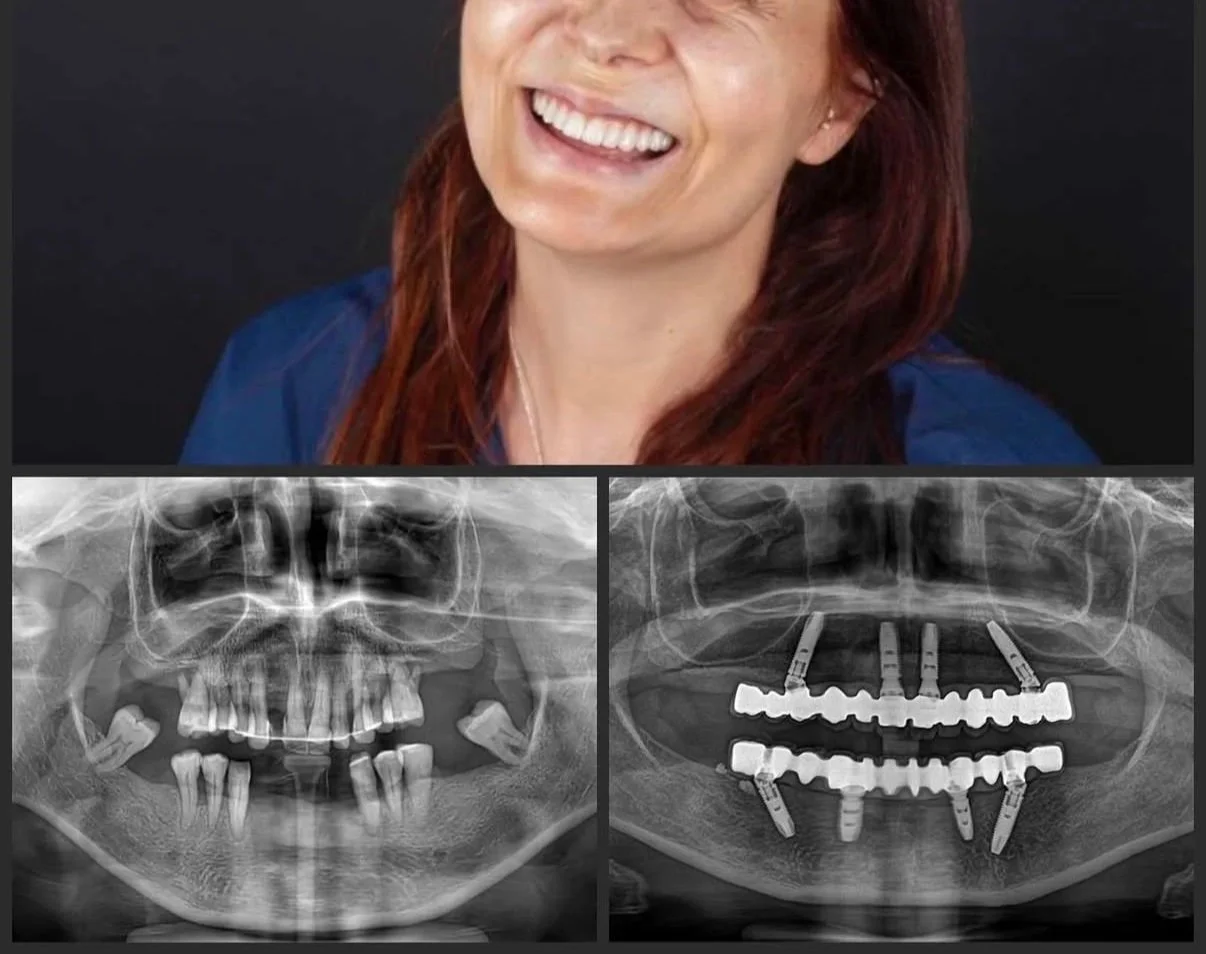
Before and after panoramic X-rays showing all-on-4 full mouth dental implant restoration.
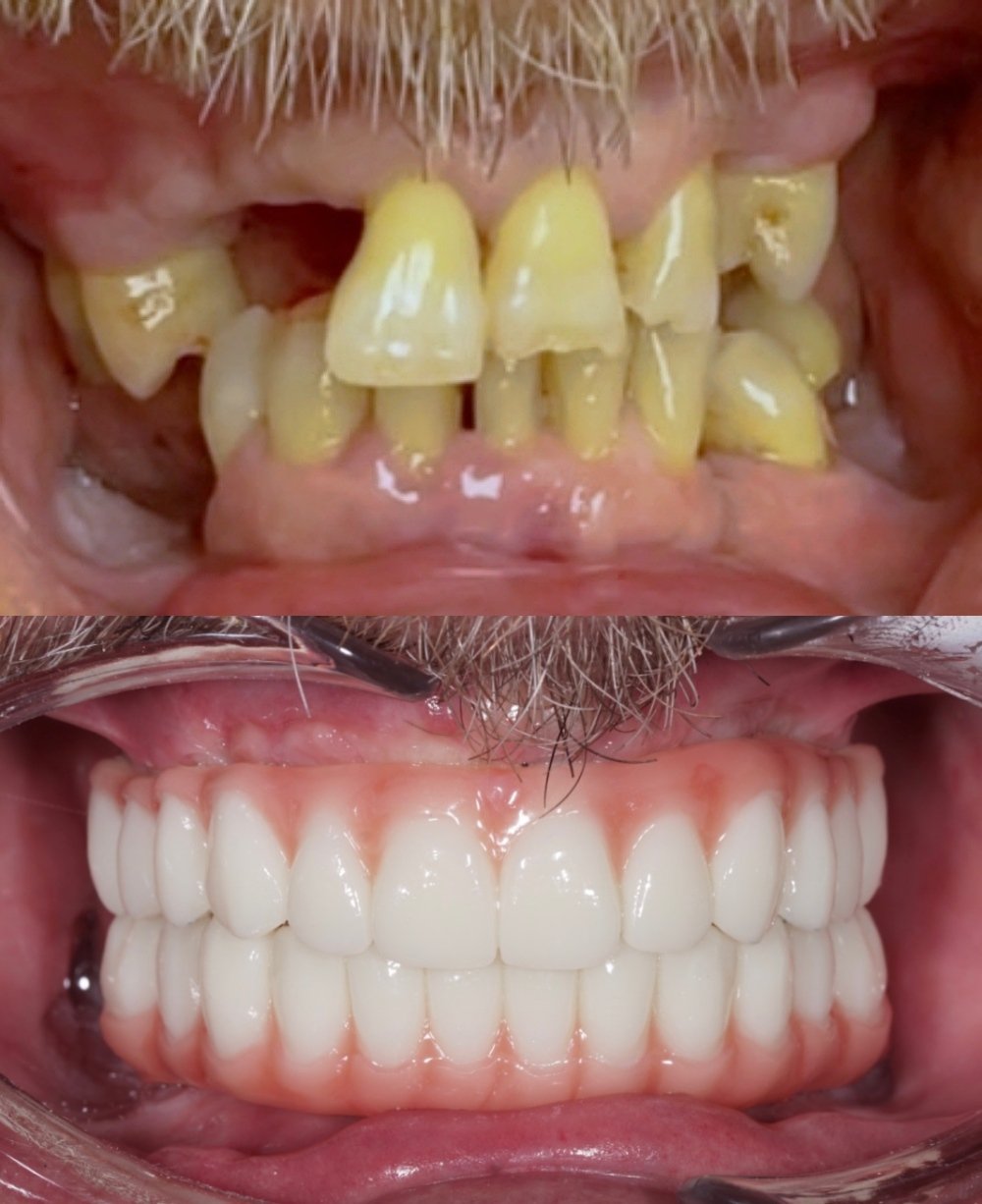
Before and after all-on-x full-arch dental implant restorations replacing severely damaged and missing teeth with a fixed implant-supported prosthesis.
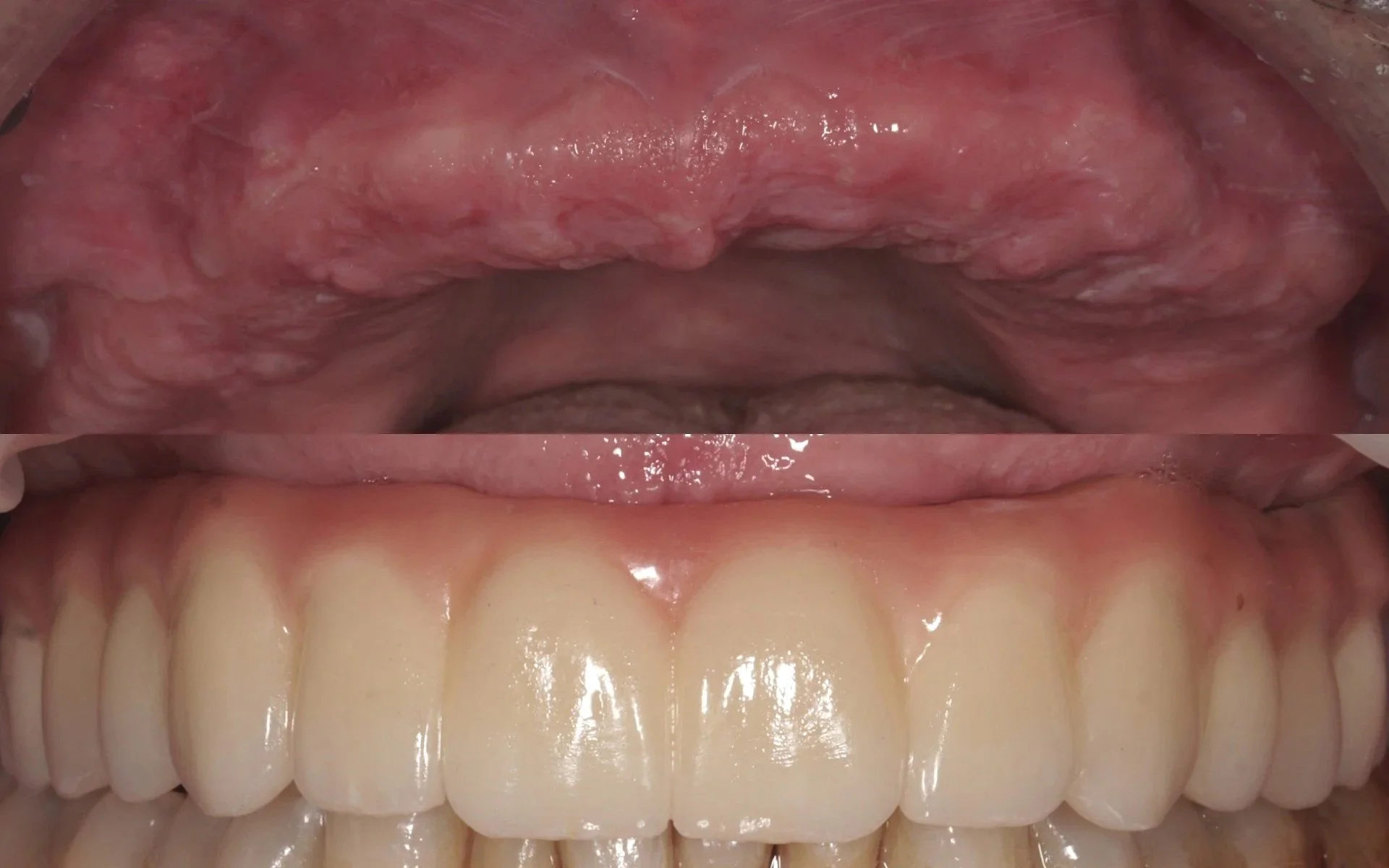
All-on-6 full arch implant restoration in the upper jaw using a monolithic zirconia prosthesis, providing a fixed, durable, and esthetic solution for complete tooth replacement.
— CLINICAL EDUCATION
All on X Full Arch Implant Case
Documentation & Education
For patients researching implant dentistry in greater clinical depth — including documented surgical cases, treatment planning principles, bone grafting, and full-arch rehabilitation — detailed educational resources are available at ImplantDentistryToronto.ca
Implant Surgery & Cases
Surgical case documentation including single implants, immediate placement, and complex reconstructions.
All on X Full-Arch Rehabilitation
All-on-4 and All-on-X case documentation, treatment planning, and patient selection criteria.
— FAQ
All-on-X
Questions
Questions about your specific clinical situation are best answered at a consultation, where your CBCT imaging and case details can be reviewed directly.
-
The cost varies depending on the number of implants used, the prosthesis material selected (acrylic vs zirconia), whether preparatory procedures such as extractions or bone grafting are required, and whether IV sedation is included. At Innova Dental, a detailed itemised cost breakdown is provided at your consultation once your CBCT scan has been reviewed and a treatment plan developed. We recommend requesting an itemised estimate when comparing providers, as "All-on-4" pricing can vary significantly in what is and is not included. Ask our team about available payment plan options.
-
In many cases, yes. A provisional (temporary) full arch prosthesis is typically attached to the implants on the same day as surgery — this is the "teeth in a day" or "same-day teeth" workflow. However, this provisional is not your final prosthesis. It is a functional, aesthetic temporary arch that you wear during the three-to-six-month osseointegration period. The final, definitive prosthesis is fitted once the implants have fully integrated with the bone. Whether same-day loading is appropriate in your case is confirmed during surgical planning, as it depends on implant stability and bone quality achieved at surgery.
-
With proper maintenance, the implant fixtures themselves can last a lifetime. The prosthetic arch is subject to normal wear over time — acrylic prostheses may require maintenance, adjustments, or eventual replacement after many years of function, while zirconia prostheses are more wear-resistant but must be replaced rather than repaired if damaged. Regular professional cleanings and annual check-ups are essential to long-term success. Patients who maintain good oral hygiene and attend scheduled review appointments achieve the best long-term outcomes.
-
Possibly, yes. All-on-X was developed in part specifically for patients with reduced bone volume who were not candidates for conventional implant placement. The angled posterior implants access denser regions of the jaw — in the upper arch, toward the pterygoid or zygomatic bone; in the lower arch, toward the symphysis and parasymphyseal region — where bone tends to be better preserved even after significant resorption. Whether this approach is viable in your specific case depends on your individual anatomy and is assessed by CBCT scan at your consultation.
-
The surgical procedure is performed under local anaesthesia — the area is fully numb and you should not feel pain during surgery. IV sedation is available for patients who want additional comfort and relaxation throughout. Post-operatively, you should expect swelling, bruising, and soreness for several days to a week, which is managed with prescribed pain medication. Most patients find the post-surgical discomfort manageable. The provisional prosthesis allows you to eat soft foods and return to normal daily activities relatively quickly after surgery.
-
Traditional removable dentures sit on the gum surface and rely on suction or adhesive for retention. They can slip when eating or speaking, do not stimulate the underlying jawbone — leading to progressive bone resorption and a changing jaw shape over time — and often become increasingly unstable as bone volume reduces. All-on-X implants are fixed permanently to titanium posts anchored in the jawbone. They do not move, restore full chewing function, and the implants actively stimulate the bone — helping to slow or prevent further resorption. The result functions and feels much like natural dentition.
-
Yes, in selected patients it is possible to perform full arch implant surgery on both the upper and lower jaw in the same surgical appointment — sometimes called full mouth rehabilitation or full mouth reconstruction. Whether this is appropriate depends on your overall health, the complexity of each arch, the total operative time involved, and the recovery demands of bilateral surgery. Dr. Cavus will advise you on the safest and most effective approach at your consultation.
-
Coverage for implant treatment — including All-on-X — varies significantly by plan. We recommend contacting your insurer before treatment begins and requesting a pre-determination of benefits. We can provide a detailed treatment plan to submit on your behalf.
-
Prior to surgery, you will need a CBCT scan and a thorough clinical and medical assessment. If you smoke, you will be strongly advised to stop before surgery begins. Medications that may affect surgery — including blood thinners, bisphosphonates, and immunosuppressants — will be reviewed and managed with your prescribing physician as needed. Patients choosing IV sedation must fast for the prescribed period before their appointment and must arrange for a responsible adult to accompany them home. Complete written pre-operative instructions are provided by Dr. Cavus at your planning appointment.
— BOOK A CONSULTATION
Ready for a
Set of Fixed Teeth?
Book an All-on-X consultation at Innova Dental in downtown Toronto. Dr. Cavus will review your CBCT imaging, confirm your candidacy, and outline a clear, personalised treatment plan — without pressure to proceed.